Perspective 07 · 10 min read
The Next Era is Cultural Marketing.
Reflections and Predictions.
Robert Vincent Hébert

Reflections and Predictions.
Over the past year I've watched several organizations quietly dismantle their multicultural marketing teams. Some have folded the work into brand marketing. Others have eliminated dedicated budgets altogether, choosing instead to emphasize broader audience strategies. The reasons vary. Political pressure has undoubtedly played an outsized role, but so have tighter budgets, organizational simplification, and the belief that specialized marketing disciplines have become less necessary. Yet, nothing could be further from the truth.
America continues to become more diverse. Communities continue to form around shared identities, interests, values, and experiences. Consumers still decide which brands belong in their lives based on whether they feel understood, respected, and relevant. None of that has changed simply because a department disappeared or because a vocal 8% of consumers didn't like inclusion.
The industry has spent decades measuring multicultural marketing by the audiences it reached instead of the prowess of the practitioners.
For much of its history, multicultural marketing was viewed as a specialty discipline. The assumption was that most marketers built campaigns for the general market while multicultural marketers developed communications for audiences who required different language, different media, or different creative approaches. That description was accurate, but incomplete. It focused on who the work was for rather than what the work demanded from the people responsible for it.
Looking back, I think the discipline produced exceptional marketers because it consistently asked them to solve more difficult problems.
Before they could begin developing campaigns, they often had to convince the business that the audience represented a meaningful commercial opportunity. Once funding was secured, they were responsible for earning credibility with communities that frequently viewed large corporations with understandable skepticism. At the same time, they navigated organizations whose creative processes, research methodologies, and decision-making frameworks were usually built around majority audiences. Success required commercial thinking, organizational influence, cultural fluency, and creative judgment in equal measure.
That's a remarkably broad set of capabilities that I would argue reside within a very few marketers or marketing leaders.
Let's be honest. The distinction between multicultural marketing and brand marketing is one of skills, with the former requiring more than the latter.
In this post-DEI cultural moment, I want leaders to understand two things. All definable audiences require specialized marketing. Marketers who learned to succeed in multicultural marketing have capabilities that are becoming essential for everyone else because we are now in the era of cultural marketing. Why? Every audience now expects the same thing multicultural marketers have always been expected to deliver: marketing that demonstrates a genuine understanding of the people it's trying to serve.
One of the unintended consequences of spending a career in multicultural marketing is that it changes the way you think about marketing itself.
Over time, I realized I wasn't spending most of my energy building campaigns. I was navigating an ecosystem of competing interests, each with its own definition of success. The business wanted proof the investment would generate incremental growth. Communities wanted evidence the brand understood them well enough to deserve a place in their lives. Creative teams wanted work that felt broadly compelling without losing the cultural specificity that made it authentic. Legal wanted to reduce risk. Research teams were often working with thinner data than existed for the general market. Every decision required balancing commercial objectives with cultural credibility.
Does that sound exhausting? The work demanded constant translation. You learned how to explain communities to executives who had never belonged to them. You learned how to explain business decisions to communities that were understandably skeptical of corporate intentions. You moved between strategy, consumer insights, creative development, partnerships, media, finance, and measurement because the work rarely fit neatly inside a single marketing discipline.
That alone would have made multicultural marketing a demanding role. But there was another dynamic that shaped the people who practiced it. In many organizations, multicultural marketing wasn't simply expected to perform. It was expected to justify its own existence. Every budget cycle brought the same questions. Was the audience large enough? Was the investment incremental? Couldn't the general market campaign simply be adapted?
The burden of proof rarely disappeared because last year's program worked. It returned every year. Good work isn't enough when the discipline itself is being evaluated. The programs that survive are the ones that produce business results that are difficult to ignore. You become more rigorous because you have to. More commercially minded because you have to. More disciplined about measurement because you have to. You learn very quickly that cultural authenticity and business performance aren't competing objectives. If you can't deliver both, someone will eventually argue that neither matters.
Looking back, I don't think those conditions made multicultural marketers better because the people were somehow different. I think the job was different. It demanded the ability to build influence without authority. To defend strategy with evidence instead of opinion. To preserve authenticity while working inside organizations designed to produce work with broad appeal. To understand consumers deeply enough that relevance wasn't something you hoped to achieve after launch but something you built into the strategy from the beginning.
These multicultural marketing skills and actually leadership skills. Which may explain why so many marketers who began their careers in multicultural marketing eventually found themselves leading brands, business units, agencies, and organizations well beyond the discipline itself.
The more I reflect on my own career, the less I see multicultural marketing as a specialization. I see it as one of the most demanding leadership development programs our industry ever created. It just happened to be disguised as a marketing function.
Naturally, I've stopped referring to myself as a multicultural marketer. Not because I think multicultural marketing has become less important. If anything, the opposite is true. I've stopped using the term because the capabilities it developed are no longer confined to one discipline. They're becoming central to all of marketing.
For years, multicultural marketing was organized around demographic audiences. That made sense. Dedicated teams were created to better understand communities that had historically been underserved by both marketers and the businesses they represented. The work improved because specialists developed expertise that the broader organization often lacked.
Today, every audience behaves more like those communities always have. Consumers expect brands to understand the context in which they live, well beyond the products they buy. They move fluidly between cultures, creators, platforms, and communities that have far more influence over their purchasing decisions than traditional demographic segments ever did. Identity has become more layered. Expectations have become higher. Trust has become more difficult to earn.
The organizations that continue to think in terms of 'general market' and 'multicultural market' may find themselves solving yesterday's problem. Every meaningful audience now expects marketing that feels informed by its experiences, reflects its values, and contributes something worthwhile. That's why I think the next era belongs to cultural marketing.
By cultural marketing, I don't mean marketing built around social issues or identity politics. I mean marketing grounded in a genuine understanding of the people it's intended to serve. The best cultural marketers begin with the audience they're trying to understand. They study how communities form, what they value, who they trust, what language they use, and what experiences matter to them before deciding where a brand belongs. That's the discipline multicultural marketing spent decades developing.
It also explains why I believe the profession has underestimated the people who practiced it. Many multicultural marketers learned to defend investment before they ever received a budget. They learned to connect cultural insight with commercial opportunity because neither one was enough on its own. They learned to preserve authenticity while navigating organizations designed to produce broadly appealing work. Most importantly, they learned that relevance is the outcome of understanding people well enough to contribute something they actually value.
The next generation of marketing leaders will be distinguished by how well they understand people, how effectively they influence organizations to act on those insights, and how consistently they help brands earn a place in consumers' lives. That's what multicultural marketing was quietly teaching all along. The industry may have called it a specialty. I think history will remember it as one of marketing's most complete leadership disciplines.
What AT&T’s collaborations with Temi Coker, Handel Eugene and Zipeng Zhu taught me about cultural meaning, mutual value and the power of putting brand scale behind an artist’s vision.

How do you turn years of earned community trust into work that deserves a place in people's lives independent of the brand behind it?

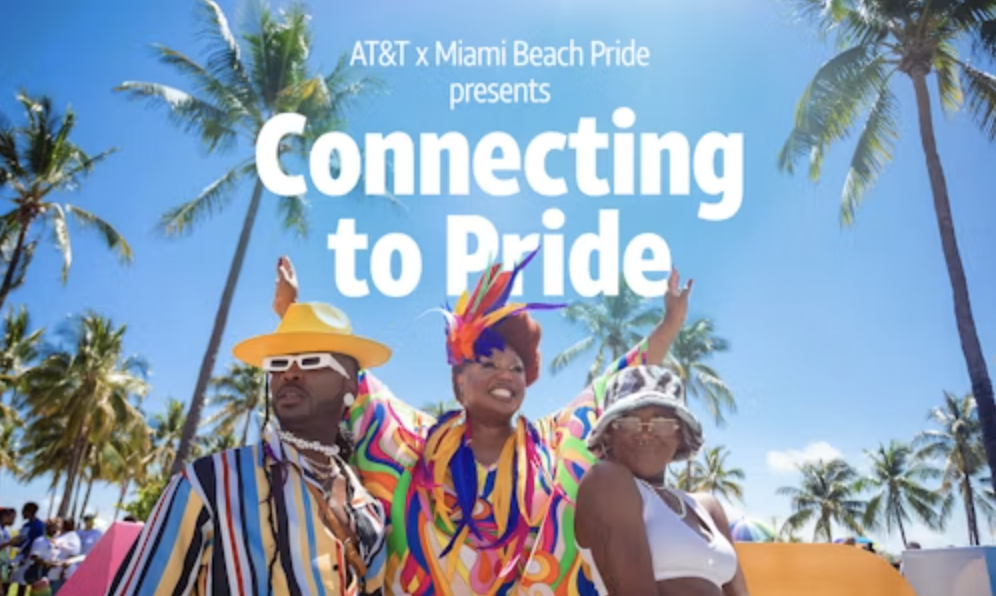

How do you make a long-standing community relationship felt rather than explained?
How do you make an unfamiliar financial brand believable to American investors, and build a sellable product out of the answer?

How do you earn trust from an audience that has learned to discount corporate participation in its culture?
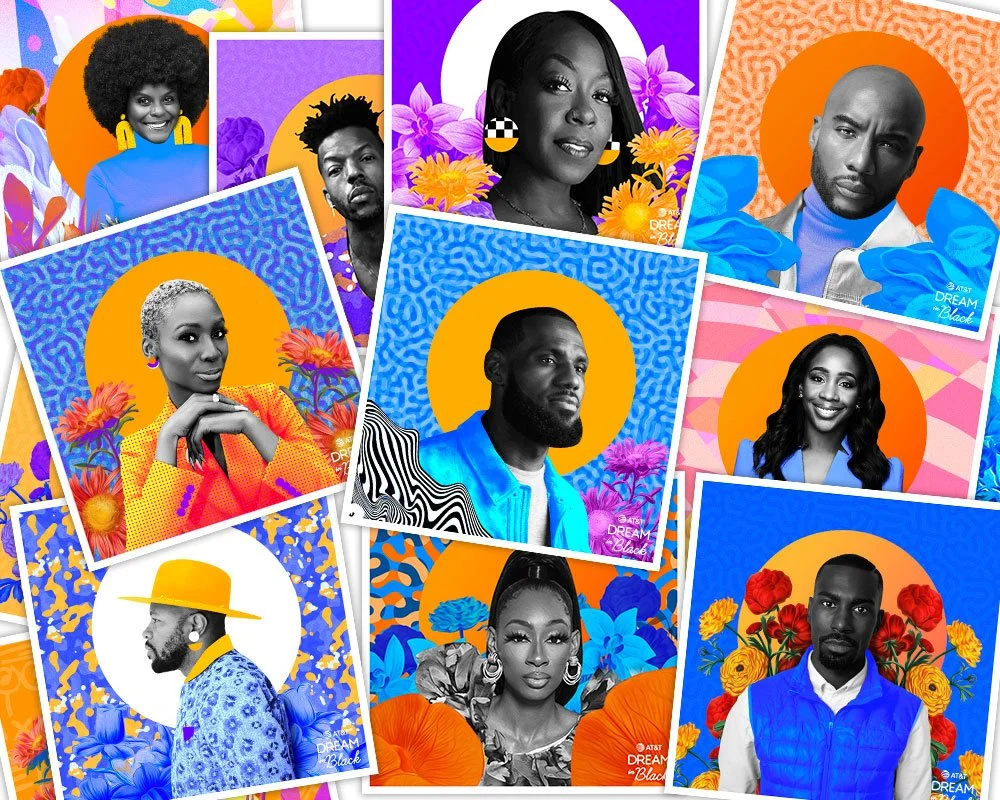
How does one of America's largest companies become a more meaningful participant in Black culture by creating value that extends beyond communications?

How does a brand earn standing inside an industry by underwriting the work rather than surrounding it with advertising?
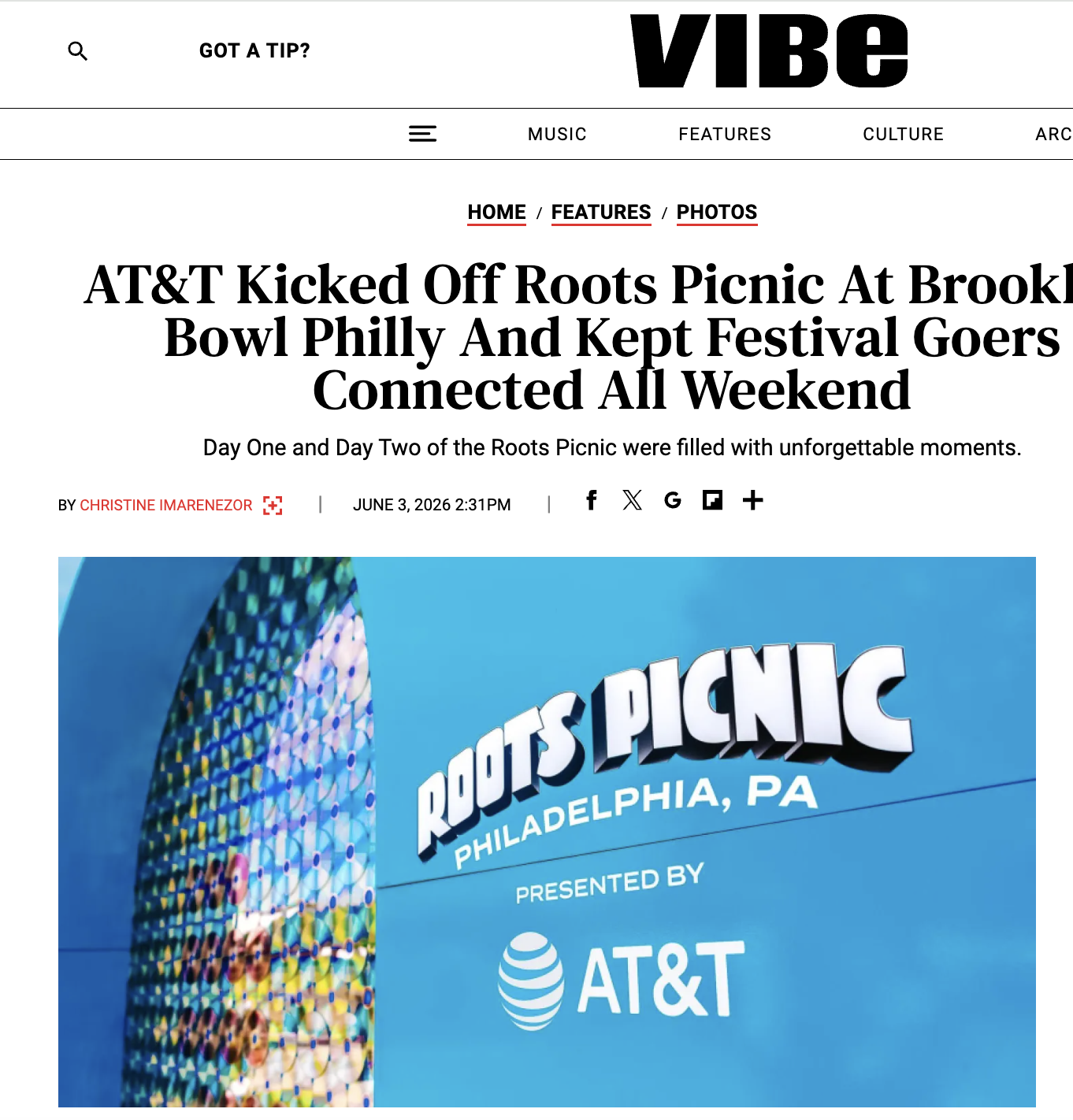
Where does a telecom's investment in music produce credit that compounds rather than credit that resets each year?

How does a brand scale a founder-led movement without taking it over, or diluting the voice that made it worth scaling?
How does a legacy media franchise modernize its point of view without losing the audience that built it, or failing the audience it needs next?
How does a new streaming platform launch inside the most crowded media weekend of the year, and become one of the stories, not a footnote to someone else's?