← Perspectives
Perspective

How to Build Better Talent Partnerships in 2026

A New Model for Achieving Influence

Author
Robert Vincent Hébert
Published
Reading time
2 min read
Category
Talent Partnerships
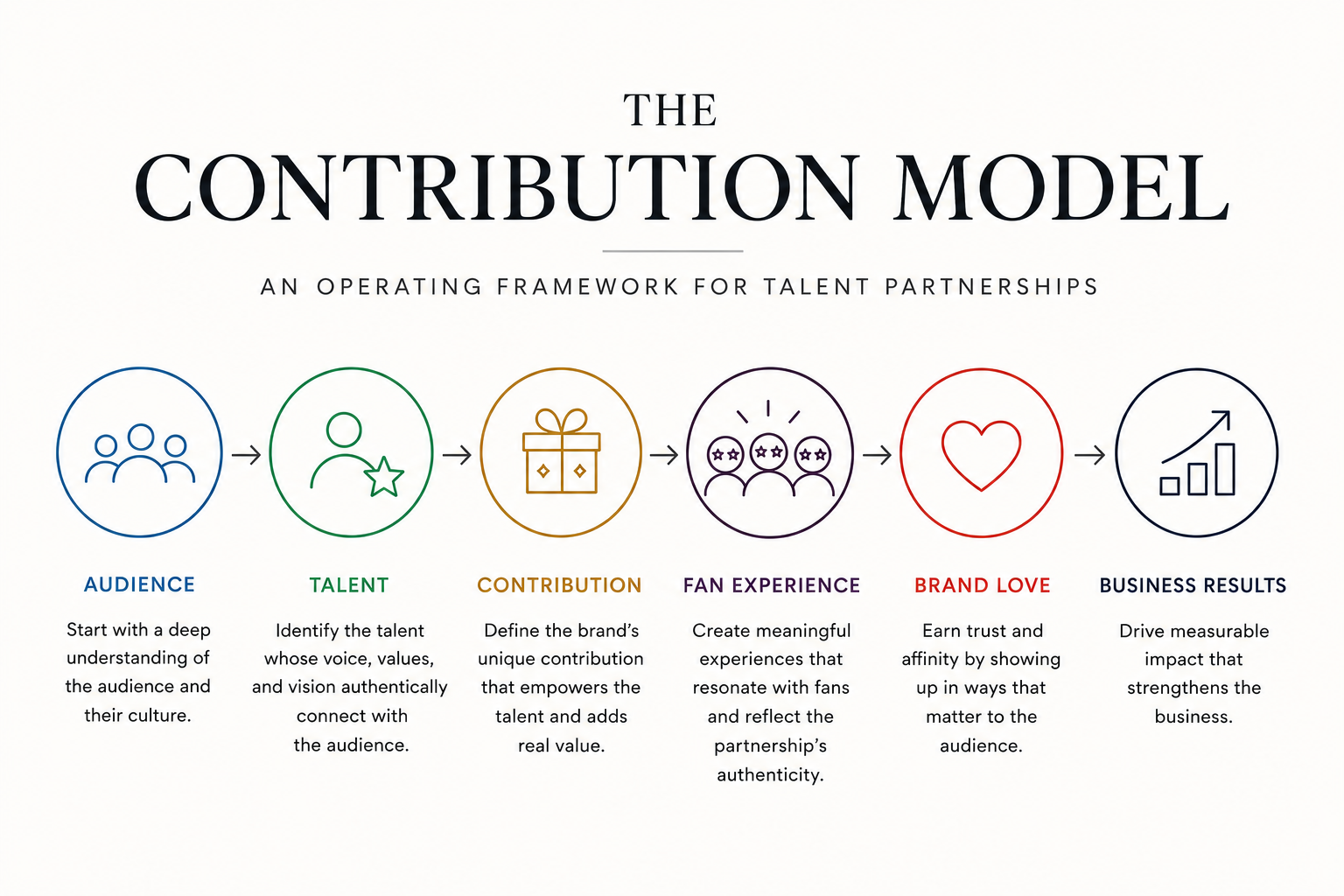
The Contribution Model, an operating framework for talent partnerships covering Audience, Artist, Contribution, Fan Experience, Brand Love, and Business Results.

Talent partnerships have become one of the most important capabilities in modern marketing. A well-designed partnership can generate earned media, original content, strengthen brand affinity, deepen customer relationships, and contribute to measurable business outcomes. Few marketing investments are expected to accomplish as much across so many disciplines.

Many organizations, however, still approach talent partnerships as a sourcing exercise. Teams begin by identifying artists, creators, athletes, or influencers with the right audience, negotiating commercial terms, and developing campaign ideas. Those activities are necessary, but they focus on selecting talent rather than designing a partnership.

In my experience, the partnerships that create the greatest long-term value begin somewhere else. They begin with a clear understanding of the audience the organization hopes to serve, the role an artist already plays within that community, and the contribution a brand is uniquely positioned to make. That sequence changes the partnership from a marketing activation into a business platform capable of creating value for audiences, artists, and brands alike.

My perspective on talent partnerships did not originate in entertainment marketing. It began in editorial.

Early in my career I worked at the intersection of publishing, audience development, and branded content. The discipline was consistent. Understand what audiences value. Understand what the brand hopes to accomplish. Respect the editorial voice audiences already trust. Create something that advances all three.

When branded content emerged as a defining innovation in digital advertising, the mechanics evolved but the discipline remained intact. Brands succeeded when they contributed something audiences considered worth their attention.

Social platforms have changed who holds authority, not how trust is earned. Publishers no longer have an exclusive role in shaping culture. Artists, creators, journalists, athletes, and filmmakers increasingly cultivate their own communities through a distinctive point of view and sustained relationships with audiences. Brands are now collaborating directly with those trusted voices rather than primarily through media organizations.

That evolution required a new operating model for partnerships.
Social platforms have changed who holds authority, not how trust is earned.
Section 01

The Contribution Model

The Contribution Model, an operating framework for talent partnerships covering Audience, Artist, Contribution, Fan Experience, Brand Love, and Business Results.
Figure One. The Contribution Model. The Contribution Model provides an operating framework for designing talent partnerships by beginning with the audience, identifying the right artist, defining the brand's unique contribution, creating meaningful fan experiences, and ultimately generating brand affinity and business results.

Audience → Artist → Contribution → Fan Experience → Brand Love → Business Results

The Contribution Model organizes partnership decisions around six connected elements.

Audience comes first because every partnership should begin with the people a brand hopes to serve. Understanding the audience provides the context for selecting an artist whose relationship with that community has been earned over time.

The artist informs the contribution. Rather than asking what a brand can say, the better question is what a brand can make possible. Contributions may create access, fund ambitious work, expand opportunities, remove barriers, or enhance the experience fans receive.

When audiences recognize that contribution, the partnership creates experiences people remember. Those experiences influence how the brand is perceived and, over time, contribute to stronger commercial outcomes. Brand building and business performance become connected rather than competing objectives.

Section 02

The Contribution Model in Practice

Section 03

Looking Forward

Talent partnerships are becoming an organizational capability rather than a communications tactic. Organizations that consistently create value understand that influence is built through contribution. They design partnerships around audiences, empower trusted voices, and create experiences that people choose to share. The campaigns may end, but the relationships continue.

Executive takeaway

Next Time…

Before selecting an artist, ask five questions:

  1. 01Who are we trying to serve?
  2. 02Why does this artist matter to that audience?
  3. 03What can only our brand contribute?
  4. 04How will that contribution improve the fan experience?
  5. 05What business outcome should that experience create?

Those questions shift the conversation from acquiring talent to designing partnerships.

Explore More Executive Briefings

All Briefings →